Moroccan Culture
Moroccan Culture
A carnival of cultures tucked away between the magnificent Atlas and the formidable Sahara… Add the warmth of the Atlantic Coast, and you have the welcoming, chaotic, and at times, intense Moroccan culture.
There are many ethnicities contributing to this awe-inspiring patchwork. Berber, Arab, Jewish, and Mediterranean communities are some predominant ones. A greeting, or salaam, will be much appreciated, and a glass of steaming tea will always follow a hearty meal. The code of culture in Morocco is not hard to decipher. And the stories reverberating from the desert to the mountains are lifelong.
Eating & Drinking
“An enthralling food scene awaits in Morocco, where oldest nomadic culinary arts meet oriental touches from Arabic cuisine.”
Lamb, vegetables, and myriad exotic spices: This is the very heart of Moroccan food that developed into a full-fledged cuisine. If you are a vegetarian, you will be missing much of what makes Moroccan food unique. Still, there are countless dishes in which legumes replace meat. The ritual of eating is as much of a cultural concept as the food itself in Morocco. Couscous is a Friday dinner staple in every family meal all around the country. As for the aromatic Harira, it is an essential part of every iftar in Ramadan. Apart from the heart main dishes, you will find a plethora of characterful street food in the sensuous souqs and medinas. Morocco’s traditional breads are must-tries. Sweet delicacies such as semolina cakes and fried doughs are never missing from food stalls.
Locals will offer fresh mint tea almost everywhere in the cities. But for the original tea ceremony that is essential to Moroccan culture, wait till you are in the desert. Skillful Berbers present the tea on copper trays, pouring from a great height as part of the tradition. Fresh leaves are put into the glasses for extra aroma.
Unique Crafts & Shopping
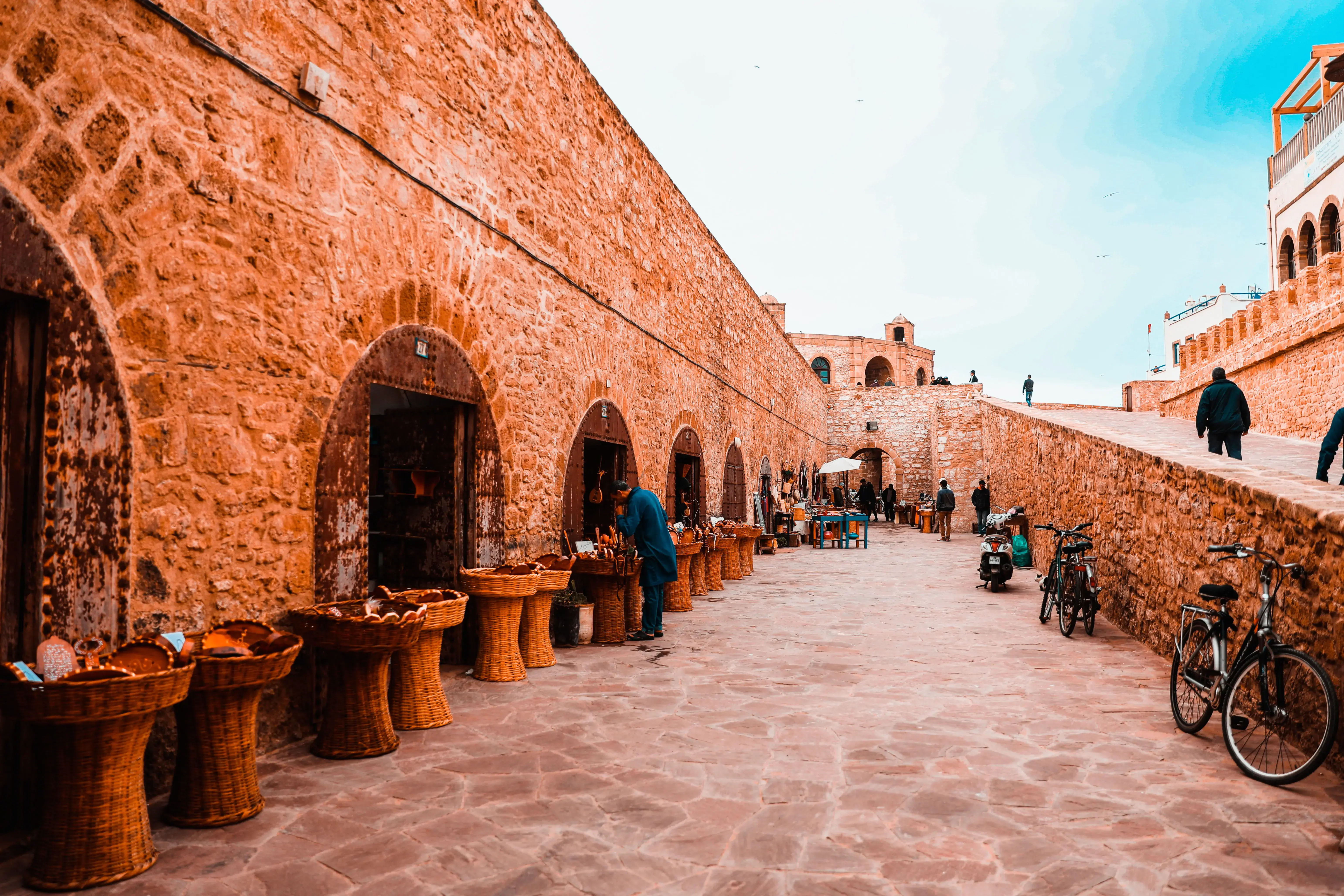
The best places to shop in Morocco are the hectic souqs. Djeema El Fna’s reputation precedes itself, and this is indeed the center of Moroccan culture. Shopping here is not only a commercial activity—it is a cultural engagement. Equally fascinating are the leather tanneries of Fes and the spice markets of Marrakech. In Morocco, production is all about artisanship, with age-old Berber, Arab, and European handcrafts brought to life.
Morocco has a tantalizing shopping scene that you won’t get over soon. The electric Moroccan blue on shiny fabrics, masterful metalwork, and ornate patterns everywhere… This is the true heart of Moroccan shopping culture. And the best souvenirs to take home vary in every destination. When in Fes, handmade metal lamps are the traditional gifts to buy. You will find the highest-quality argan oil in Marrakech—just make sure it doesn’t have bubbles forming at the top. The beachy scene in Essaouira offers the most colorful and chic waist cloths you can imagine. But this is just the beginning, wait till you see the spice and leather scene. These are the commercial symbols of Moroccan culture. Also, you can always go for more contemporary choices like paintings of Moroccan still-life or jewelry made with local gems.
Takeaway: The key tip for shopping in souqs is to spend a day exploring the prices first. If all you have is hours, make sure you check a few stalls before you buy something. Check the less busy stalls in the alleys, they will have the most unique items. And if you wish for a discount, negotiating is always rewarding.
Religion & Etiquette
Morocco is a colorful palette of different ethnicities, and the majority of them unite around one religion: Islam. Cultural events follow the Islamic lunar calendar. Etiquette and everyday life generally revolve around the five times of prayer and Islamic teachings. Moroccan people also value tradition which is heavily influenced by the history of their mainland and the landscape they dwell in. In the big cities, you will experience Berber traditions that go hand-in-hand with more recent influences of Islam. But, as you travel deep into the Moroccan land, endemic cultures will begin to unfold before your eyes. A different shade of religion awaits among the nomadic Berbers of the High Atlas and Dades Valley. And, in the extreme conditions of the deserts of Zagora, it becomes all about celebrating the earth and its offerings.
Ramadan, the holy month of Islam, is of great importance in Morocco as in the rest of the Muslim world. If you are traveling during this month, you will see Moroccan culture in full bloom. Fasting begins at dawn and ends with an incredible in the evening. Take your part in the epic iftar dinner.
Festivals & Events
“Morocco’s festivals are electrifying, ranging from religious tributes to traditional rituals, and more contemporary celebrations of arts, music, culture, and age-old history.”
Annual festivals are a huge part of Moroccan culture, whether they are religious celebrations or modern events. Most joyous ones bring together the concepts of family, tradition, and food. Depending on which season you are visiting, there will be something to celebrate in this culture-laden land. Welcome the new year in the Berber way on January 12-13 in the altitudes of the Atlas. More on Morocco’s nomadic culture is in the International Nomads Festival, which takes place in April. Indigenous food and Berber tunes make this particular event unforgettable.
Islamic events and holidays change every year with the lunar calendar. But these days, it is spring and summer that get the attention. Celebrations take place at the centers of big cities like Marrakech and Fes through Ramadan. Eid al-Fitr concludes the holy month with unbridled joy and thankfulness. Some shops and restaurants may be closed at this time. But take it from us, it is one of the best times to experience Moroccan culture.

Morocco Food Guide
Check out our Morocco Food Guide for the tasty local dishes and drinks you must try.

Morocco Travel Advice
Everything you need to know about traveling to Morocco is in our Morocco Travel Advice guide.
