Vietnamese Food
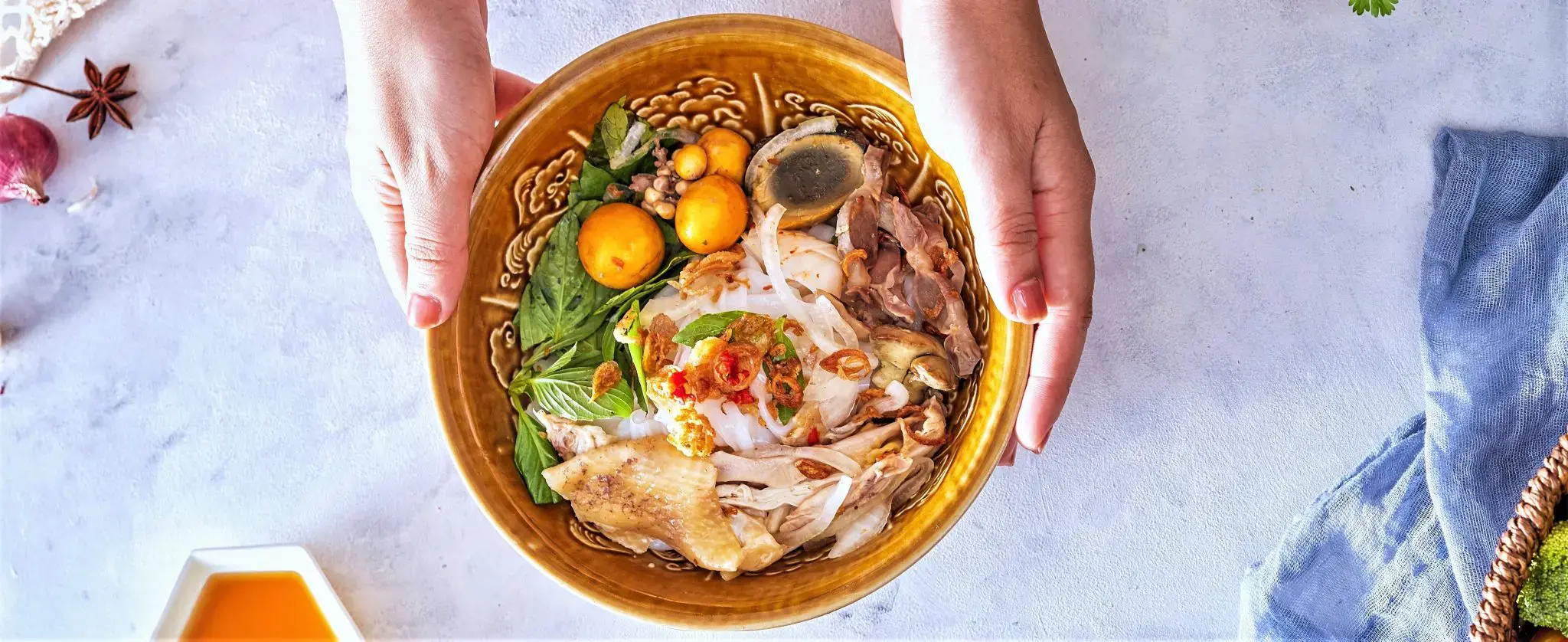
Find out all you need to know about the best Vietnamese food and drinks before your trip.
Must-Try Vietnamese Foods
Here are the top dishes of the Vietnamese food scene that will help you eat like a local:

Goi Cuon
A refreshing starter in Vietnamese restaurants and the most favorite go-to snack in the street food scene, Goi Cuon is transparent spring rolls stuffed with greens, coriander, minced shrimp or pork. The rice paper wrapping is the distinct quality of goi cuon. A flavorsome sauce is the absolute-must near the dish, made of peanuts mixed with hoisin sauce. They are by far one of the most affordable choices of Vietnamese food.

Banh Mi
Banh Mi is a french delicacy that has survived from the colonial days. And today, it is the most famous Vietnamese street food and a breakfast staple. The baguette sandwich is delicious and plentiful with a filiing of pickled vegetables, pate, butter, soy sauce, cilantro, and chillies. There are versions in which liver, pork, beef, or chicken replace pate, so you can choose your meat based on your liking. Banh mis are scrumptious choices to start the day.

Pho
The iconic Pho bowl is Vietnam’s face in the international cuisine. It is the signature dish for many reasons—it packs the quintessential Vietnamese products that travelers love. There are rice noodles, a variety of greens, nuoc cham or chili sauce swimming in a light beef or chichken broth. The bowl also has bean sprouts, lime wedges, fresh herbs, mint, cilantro, and onions on the top. It may come as quiet overwhelming with all these ingredients, but pho is actually a light meal, and we recommend eating it at breakfast like the locals.

Bun Cha
A Hanoi original, Bun Cha is a delightful meat dish that is typically consumed at lunch or dinner. Grilled pork belly is the main ingredient, served with vermicelli noodles, salad, herbs, and a chilli fish sauce. You may come across other versions with meatballs, but bear in mind that authentic bun cha is made with pork. Eat it at noon when you are in Hanoi for the most traditional experience.

Com Tam
Com Tam means “broken rice” in Vietnamese, taking its name from the broken grains of rice that aren’t fit for selling so the farmers keep for themselves. It is grilled meat and a fried egg served on a bed of broken rice with pickles and vegetables on the side. Inexpensive and simply delicious, Com Tam represents the country culture of Vietnam. It is best in the street food stalls of Ho Chi Minh city.

Mung Bean Pastry (Bánh Dau Xanh)
These picturesque pastries are some of the favorite traditional Vietnamese desserts you should try to sweeten your day. They hail the local mung beans of Vietnam with a delightful recipe of sugar, oil, and bread. The texture and aroma of the mung beans may feel quite unusual at first, but you will love it if you are into unique local tastes. It goes perfectly with some Vietnamese tea.
Must-Try Vietnamese Drinks
Egg Coffee
The world’s coffee scene gets a twisty turn in Vietnam with the wonderful egg coffee. It has a base of egg yolks and condensed milk that a bartender in Hanoi invented to soften the classic Vietnamese black coffee. The thick mixture is poured over the coffee which gives it a slightly burned-looking crust on the top. Sip some egg coffee in Vietnam’s cozy cafes to take a moment’s rest from sightseeing.

Ruou Can (Tube Wine)
Coming all the way from the indigenous tribes of the Central Highlands, the tube wine of Vietnam is one of the most authentic touches in the local cuisine. It is glutinous rice fermented in jars for at least a month together with wild herbs (often collected from the local forests). Ruou Can is a perfect finish to Vietnamese food with its quality taste. But other than its flavor, Ruou Can is a cultural element inherent to many of Vietnam’s special events from festivals to harvest feasts. It is traditionally drank out of an earthenware jar through long pipes.
